Author: vigyanshaala

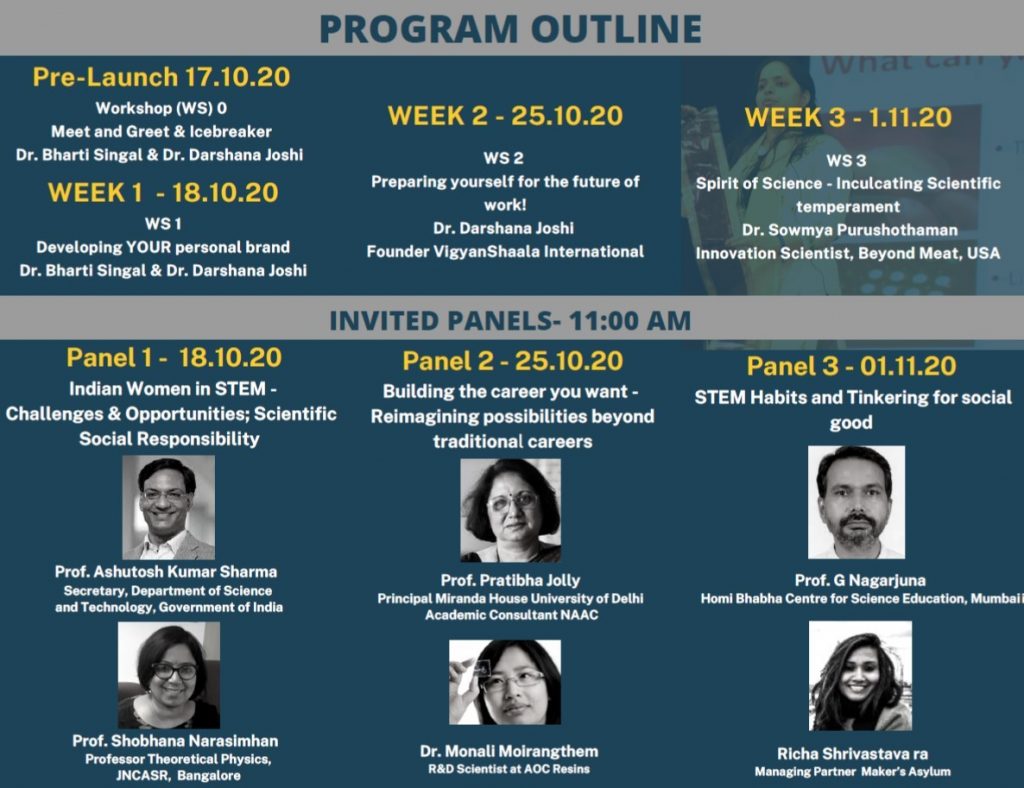
  • Conversation With Prof. Ashutosh Sharma, Secretary, Department of Science and Technology, Government of India.

    “When we start to think about a person’s scientific success and journey, we forget that the scientist is a human being first. Our primary engagement should be with humanity, and we should use science for the betterment of society. In life, you cannot compartmentalize things. If someone can not commit to life it will be hard for them to have a passion for science”, said Prof.

    Ashutosh Sharma, Secretary, Department of Science and Technology, Government of India.

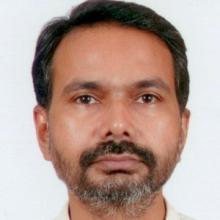
    Prof. Ashutosh Sharma

    He is a visionary academician who has made some exceptional interdisciplinary contributions in the nanoscience and nanotechnology fields. He is a recipient of the prestigious Shanti Swarup Bhatnagar award in engineering sciences for his “original pioneering contribution to the understanding of the behavior of thin films and other highly confined nanoscale systems.” He has been conferred with numerous awards, but according to him awards do not define a scientist, it is his work in the field that leaves a long-lasting impression on the community.

    “Science brings a larger dimension to life. My scientific journey is all intertwined with successes and failures. Success does not define one’s life and neither should failure. Both of them are transient. To live a life which we are proud of we need to understand both of them. Limited success or failure keeps on interchanging in life, but the most important thing is that you have to keep learning from both. It is a sense of curiosity, mystery, evidence-based analysis, and stamina for life-long learning that science has taught me, and all these helped me grow as a human being in life outside of science as well”.

    He very firmly stated he does not like calling anyone old. He said, “Age is the linear translation in time. Someone old today was younger yesterday, and the same person was young before that. So, I just call everyone young or younger! When I was younger, I have seen many of my young peers indulge in criticism of ‘old people’, especially in positions of authority. Some of them have now switched to criticizing the young and younger folks! It is the easiest thing to criticize anyone or any institute or a policy, for it brings psychological comfort. However, one has to remember not to get caught in whimsical, impulsive criticisms. It can degenerate into becoming a vicarious substitute for your work”.

    Sometimes in life when you do not get an award or a rewarding one is easily demotivated. Prof. Sharma says, “ When you don’t get an award, we quickly say that the world is unfair and terrible. Our world view undergoes a metamorphosis and we set out to blame everyone. But if we get an award, we give credit to ourselves and everything in the world seems hunky-dory. It is important to share with the younger generation that many different factors in which one does not have any control can play an important role in our successes, including awards. There could be both false negatives and positives. Why should such awards affect our passion for science or life? Awards or rewards have nothing to do with the work that we still need to do. Dedication to gain knowledge, passion to do science, acceptance of failures, developing grit in life are some of the values that we need to cultivate, and these will ultimately help one value one’s work and nothing else. Of course, as you do your work with commitment and excellence, bonuses such as promotions, recognition, etc. will likely follow. However, never let these be the focus of your life or excuses that take us away from our work”. His advice to students is not to get demotivated or demoralized because of circumstances beyond our control for leading a minimally stressed life.

    Prof. Sharma received his B.Tech. in Chemical Engineering from IIT Kanpur in 1982. In 1984, he obtained his master’s from Pennsylvania State University and later obtained a Ph.D. at the State University of New York, Buffalo in 1988. After his Ph.D. , he worked as a research scientist with the Department of Ophthalmology, School of Medicine and Biomedical Sciences, State University of New York. In 1990, he moved back to India and joined IIT Kanpur as an Assistant Professor in the Department of Chemical Engineering. On his decision to move back to India he said, “As a scientist, I think it is important to identify and separate our self-centered interests from the greater good of people and organizations we serve around us. Professionally, it was not easy to move from the USA to India in the 90s owing to very different scientific ecosystems and the opportunities offered. I had decided to be a teacher in my high school years and had made up my mind to be at an IIT in my undergraduate years. Academia offered me the freedom to pursue knowledge that I desired. India offered extraordinary challenges, together with an exceptionally rich canvas and texture of life that appealed to me. I never doubted that India was the right place for me. I look at all challenges as opportunities. Be proud of your way of life and culture and of course work on what needs to be changed. Work towards a better way of life and building a thriving society in whatever role life offered us. Have the self-confidence to stick to your impartial analysis. Keep in mind all factors and decide. Decisions might be correct or wrong but be ready to be committed to all your decisions and take responsibility for them”.

    Further, he said, “Basic research has to be less incremental and more profound. As scientists, we should have a risk-taking ability. Fear of failure is deeply rooted in each one of us, but we have to work to overcome this fear. Constantly keep challenging yourself. Look for new opportunities. We cannot all be Einstein but can work hard to utilize our potential to its maximum. In applied research, direction, and relevance matter. We should identify a relevant problem and not necessarily a fashionable problem to work on even though it may have risks. We need to train and make leaders, not followers. Think about new things. Much of the current research is based on tools and not on problems. The tendency is to stay in one’s comfort zone as one is aware of and master of certain techniques. We often search for the problems to fit these tools. But what also needs to be cultivated is problem-based research. Do not be afraid of your limitations but identifying them and learning more about them will help you overcome those. Keep on learning and adapting to advance your search and research”.

    Prof. Sharma added, “ That this philosophy applies to life as well. Get rid of “ energy vampires” that drain you of your potential and energy. Don’t just complain about circumstances and people but keep your curiosity and yearn to learn and adapt to changing situations. You make your life. Your choices will decide the course of your life. So instead of looking at the past, what I often do is project myself in the future to understand and anticipate the direction of today. Self- awareness, and self- analysis are very important for growth and development. Things are convenient if you know them but in life, there are things you need to do. Take a route to challenge yourself rather than being confined to comfort zones. At every moment keep learning. Learn from people from different backgrounds, do not limit yourself by divisions. Amalgamate knowledge from all sources and be sympathetic to people who have different views. Empathy and capacity to learn, the curiosity of the subject is important for learning rather than focusing on the content. Develop a lifelong capacity to learn, education is a journey of synthesis of knowledge not only analysis. This is very important in life to make meaningful decisions that are not spelled out in textbooks. Choose your life, choose your goals, have control, and take responsibility. Live a fulfilling life that one can be proud of, rather than a successful life as defined by the yardstick of other people”.

    Author- Dr. Arti Dumbrepatil, Science Writer/Communicator.
    Co-lead and chief communicator for Program Kalpana of VigyanShaala International

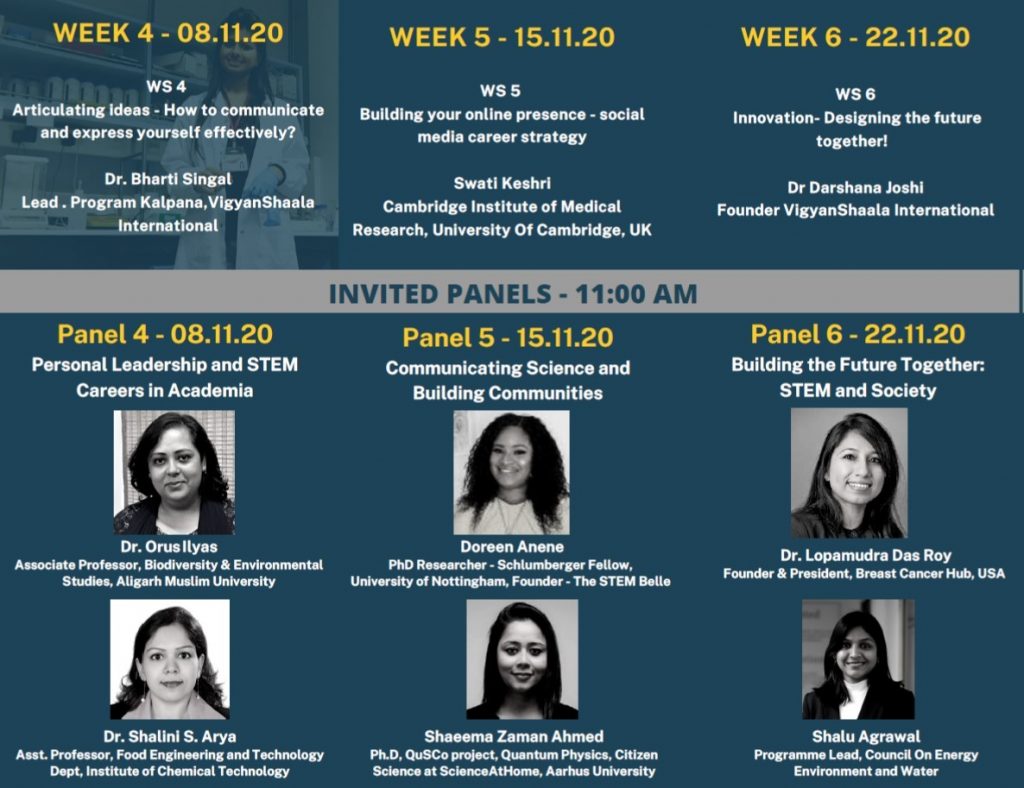
    Watch the full panel discussion – Indian Women in STEM Prof. Ashutosh Sharma (Secretary DST) and Prof. Shobhana Narasimhan (JNCASR)
  • Kalpana Stories – Prof. Shobhana Narasimhan

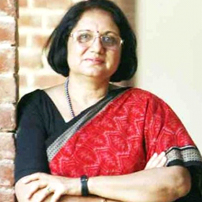
    Shobhana Narasimhan is a Professor of Theoretical Sciences at the Jawaharlal Nehru Centre for Advanced Scientific Research in Bangalore, India. She is a Fellow of the National Academy of Sciences, India. Prof. Narasimhan is a Fellow of the National Academy of Sciences, India since 2011. In 2010 she was awarded the prestigious Stree Shakti Samman Science Award of the Indian Academy of Sciences and the Kalpana Chawla Woman Scientist Award of the Government of Karnataka. Prof. Shobhana Narasimhan has been elected as an International Honorary Member to the American Academy of Arts and Sciences. Narasimhan earned her B.Sc. in Physics from St. Xavier’s College, Mumbai in 1983, and her M.Sc. in Physics from IIT Bombay in 1985. She received her Ph.D. in Theoretical Physics from Harvard University in 1991. During her entire academic career, she has been a fierce advocate of women in science and has been involved with different organizations worldwide working for the same cause.

    Prof. Shobhana Narsimhan

    It is difficult in being a woman in science. All over the world women face similar problems. It is hard for everyone in one way or another. For me, I have struggled to balance my role as a daughter and as a scientist. Other woman finds it difficult balancing their roles as a scientist, wife, mother, daughter. Whenever I talk to my female students at different levels of career each one of them is overcome difficulties reaching where they are now. I am proudest of the fact I did not give up. Find the strength not to give up within yourself. If needed talk to other people to help you find that strength. Form a network of women who can support each other. We need to support and cheer each other in low times. Never think that you are lacking something, you are not good enough as most of the time these are external factors that make you think so. The biggest realization for me was to understand this, that the system is rigged to make you believe that you are not good enough. Once you realize this you can achieve anything you dream of”, said Prof. Narasimhan.

    Women in general tend to put a burden on themselves. We need to stop doing that. Women need to strive so as they are not stuck with imposter syndrome. The same applies to men as well at times. Women need to talk about the difficulties they face not just in science but in life as well. “Identify people whom you can talk to freely and honestly. Create a platform for you to express yourself. Mentors can provide such platforms”, said Prof. Narasimhan.

    “ I fell in love with physics and I never looked back. I knew irrespective of any difficulties that I might face I wanted to work in physics. My parents were supportive of me, but I had this one teacher who was not that supportive. He used to tell me I am like his daughter but at the same time also said to me that why did I need to make a living doing physics as I am a girl. It took me some time to understand that he was undermining my potential. This kind of sexism has reduced nowadays but still, you might face such individuals. Develop self-confidence and forge ahead boldly with your passion”, said Prof. Narasimhan.

    She thinks that things are changing in India. She truly believes that science offers you the freedom to think and grow. Especially working in academia, she says, “ Academic research offers a lot of freedom and growth potential. It also has other perks such as a flexible work routine and most importantly an opportunity to interact and learn from younger generation students. Each student is unique and working with each one of them teaches you to be a better scientist and a human being”. She also cautions girls that they need to be careful in choosing their life partners. “ A good partner will support you and understand you while also be there to grow and advance in your career”, added Prof. Narasimhan.

    She says working with VigyanShaala International as an advisor has been great. She feels programs like Kalpana will help in the upliftment and education of young girls in our society.

    Author- Dr. Arti Dumbrepatil, Science Writer/Communicator.
    Co-lead and chief communicator for Program Kalpana of VigyanShaala International

  • Kalpana Stories – Dr. G. Nagarjuna

    “Our country needs more producers than consumers!” says Associate Professor. G Nagarjuna, Homi Bhabha Centre for Science Education, Mumbai, India. He is a STEM educator focusing on re-engineering, re-defining, and re-imagining classrooms and laboratories. A few of his amazing initiatives (visit his website for more details knowledge.org) are chaatshala.in, STEM games, Collaboratively Understanding Biology Education (CUBE). He has developed these platforms for exploring science and create a community of passionate learners. These initiatives will help them find answers to thousands of unsolved questions. A motivational place for students as well as society.  

    Dr. G. Nagarjuna

    He said, “While India has certainly established a large number of STEM institutes and universities since independence, we see a decline in the percent contributors in leading scientific fields. Why India is not a leader in the field?” Further, he said, “Our country has become the third–largest consumer of technology. But in terms of innovations, we are lagging far behind. We are not producers, but we are becoming consumers. Where has the system failed? ” 

    Nagarjuna further said, “ The answer to all these questions lies in the way our school system functions and the impact it has on the developing minds of the children. Teachers and parents are focused on pressuring students to secure good grades and emphasize getting a degree from a good college. The whole aim of this kind of education is to get a job. But through this process, students lose their passion for what they like, tend to suppress creativity, and stop exploring new things”. He thinks classrooms in India have become centers helping children learning and followed by lesson plans that are mostly half delivered by the fixed mindset of teaching-learning. This whole exercise is because of syllabus limitations and the pressure to show good school results.  

    He fondly remembers that he was scolded and punished by his professor in the university for doodling on a notebook while attending a lecture. When he thinks about the incident now, he says, “Doodling is a way to structure your ideas and develop understanding in the way you like. Everyone has a unique way of expressing ideas, either it could be doodling, writing, painting, critical questioning, problem–solving, and so on. This has to be appreciated. These all are STEM habits. For example, doodling or drawing is a way through which you develop your ideas which are translated later into making posters or making diagrams”.  

    “It is not going to be a smooth transition for moving towards re-defining and re-strengthening our classrooms if certain practices by educators are not taught properly and new practices are not adopted. Certain other challenges are expected too cultural divisions, gender disparity resulting in a lesser number of women taking up the STEM fields. These are serious problems that we need to overcome”, he said. As per Nagarjuna, we need immediate changes in the system so that children develop innovative habits at an early stage like a habit of reading books, writing a journal to record and share your thoughts as we do in today’s world by writing blogs or posts to share our thoughts. These small habits will help the students to adapt to the ever-advancing STEM fields. As a science educationist, G. Nagarjuna recommends that the schools should adapt to different platforms that provide asynchronous conversations like chatshaala.in. By using a project–based education approach students will learn to work in collaboration with other people, creating a community where people come together to learn and open up their minds to the wonderful world of science. It is the need of the hour to re-engineer our education system and re-think creating a new academic environment that is inclusive of art and innovation!  

    Links to join and explore –   

    Author- Priya Butola.  

    Content writing team intern, VigyanShaala International.  

    Program Kalpana Communications Team 

  • Kalpana Stories – Prof. Pratibha Jolly

    “ Every time in life you will be faced with challenges. These challenges have different faces like financial difficulties, cultural burdens, language issues. I think we need to equip our students at an early age to change each challenge into an opportunity. Look at the problem at hand and keep on solving.

    Prof. Pratibha Jolly

    Especially girls will face dilemmas at every stage of life from personal choices to career choices. Keep on solving these problems. Each time you solve a problem you have attained a new milestone in life. Life keeps on evolving, it is your choice to evolve and adapt along. Someone may choose to lament, and someone chooses to overcome it. The choice is yours, make the most of your circumstances and keep growing and learning”, said Prof. Pratibha Jolly, Former Principal of Miranda House, the premier college for women at the University of Delhi (2005-2019). Prof. Jolly gained her Ph.D. in theoretical physics at the Chemical Physics from the University of Delhi and taught in Miranda House for eight years before joining the Department of Physics at the University of Delhi as a Research Scientist where she began work in the area of Physics Education Research and Curriculum Development. Her research interests include computational physics; electronic instrumentation; use of computer-based technologies in education; development of locally produced low-cost equipment; teacher training; cognitive aspects of students’ learning and diverse student populations. A major thrust has been to engage undergraduate students in the development of a package called Science Online consisting of an indigenous low-cost data-acquisition system and comprehensive set of sensor circuits for real-time measurements in multidisciplinary contexts. Her multifaceted work has led to the establishment in 2008 of the D S Kothari Centre for Research and Innovation in Science Education at Miranda House with generous funding from the Department of Science and Technology.  

    Under her guidance, she has seen hundreds of girls achieve their goals irrespective of their socioeconomic status. She has worked her entire life to create and develop a liberal education system. She believes that an education system should be an equalizer for students of all backgrounds. She believes in creating a system that will help a student build confidence, discover their passion in life. She says, “ We have to equip our girls to think independently. For that, as a principal of an institute, I aimed at creating experiences for bringing change. I managed to subvert the system and bring change. A student at times only needs a few life–changing experiences to help find their passion in life as well as the same applies in science. As a teacher, I enjoy creating such experiences”.  

    Society is built with different pillars. We have known that we need people who are good at every aspect such as we need statisticians as much as a molecular biologist. We need good doctors as much as we need good teachers. Prof. Jolly said, “ I don’t think there is a mantra for bringing change. One size does not fit all. You always have a few students who are completely driven and go for their goals. While some students have to be motivated to identify their goals and are to be given resources for pursuing them. India is a linear country; we need to make sure that we do not force students to make early choices. That is disastrous. There is no need for early specialization. We should have broad–based education with exposure to the diversification of subjects”.  

    So, her suggestion to students and especially young girls is that have an in–depth understanding of the subject you want to pursue. In today’s world, all skills are required. She says, “ Let me give you an example. You want to develop experimental as well as theoretical skills in physical sciences. Botha re need to strike the balance and advance in the field. A strong understanding of this will allow you to become a good researcher or a teacher in physical sciences. Science is evidence-based, and you have to understand all subjects if you want to excel. We need to teach our students this. Pedagogies spoken about project–based learning allows one to achieve this. Project–based learning creates an inclusive learning environment. Also, on other note do not be intimidated by any lack of information. But yearn to learn and develop skills that you want. The world has a place for everybody. But we want people to come into sciences and help them within science to find their passion”.  

    She added “Life is about optimizing with what you get. Evolve and adapt. Do not get demotivated by compromises if you have to make them. It is okay to be kind of yourselves and do not fall into the clutches of the imposter syndrome. Resilience and adaptiveness will help you find alternative paths. Always remember that each experience in life is enriching. It teaches you something, you have to be receptive to understand it. Inherent depth in you will help you create a new life for yourself”. She strongly believes that everyone has a place in this world. Focusing on work is important to carve your path. In India, at the university level in present times students come from diverse backgrounds and she thinks that universities should create a vibrant learning space for all such students who have overcome multiple hurdles either personal or financial or cultural to reach this stage. She says, “ Students are like a sponge. They will absorb the knowledge you give them. As teachers and administrators, we need to create learning experiences to develop the students. Peer learning is the best. Let students learn from each other experiences. Give students the feel of real education world”.  She is extremely glad to serve as an advisor to VigyanShaala International who is trying to create such learning experiences.  

    Author- Dr. Arti Dumbrepatil, Science Writer/Communicator. Co-lead and chief communicator for Program Kalpana of VigyanShaala International

  • Kalpana Stories- Dr. Monali Moirangthem

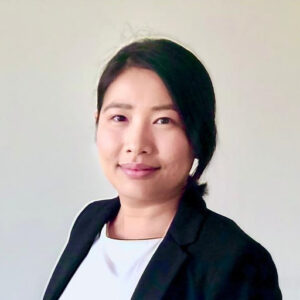
    “If you are passionate about your goals, nothing can stop you from achieving them. The key to success is believing in oneself”, said Dr. Monali Moirangthem, R&D Scientist at AOC Resins, Netherlands. AOC Resins is one of the top three companies working in composite polymers. They have done tremendous work towards building application-oriented products. She is an expert in smart polymers, the composite materials which have various applications in the automotive, marine, and construction industry.  

    Dr. Monali Moirangthem

    Her STEM journey started from a humble background in a village near Imphal, where she was born. While growing up she dreamt of becoming an IAS officer, with the motivation that this position will help her improve the education sector in India. At school, she excelled in academics and scored top ten marks in the state high school exams. While studying at college, her love for mathematics drew her towards science but she credited her attraction towards chemistry to the “Salt-Analysis” hands-on experiments practiced during the lab sessions. Pursuing her passion for chemistry, she graduated from St. Stephens College, Delhi University. She was selected for a summer fellowship in Jawaharlal Nehru Centre for Advanced Scientific Research (JNCASR), Bengaluru for three consecutive years and after that, there was no looking back for her. She knew she was passionate about research and her zeal drove her to pursue higher education. She completed her master’s degree in Chemistry at JNCASR and then moved to the Eindhoven University of Technology, the Netherlands for a Ph.D. in Functional Polymers. 

    Although coming from a small village in northeast India made life difficult it was her passion for science that motivated her to continue. She struggled a lot during her masters and went through one of the lowest points in her life at that time. She overcame a great deal of personal and professional difficulties while reaching the Netherlands for getting her Ph.D. degree. She says, “Being a girl made things more difficult for her. But being a woman also kept her motivated. Being a woman makes you stronger and not weaker”. She received several scholarships such as DST INSPIRE and POEC fellowships which helped her ease financial burdens. Today she recalls the advice she received from her school principal “being an IAS officer is not the only option to serve people. You can be a scientist to serve the society”.  

    For attracting students towards different STEM fields, she suggests educating them with fun hands-on experiments in classrooms, especially providing opportunities to young girls through proper guidance and motivation. She also stresses the need for doing internships, attending more workshops, and networking. “ While connecting with your seniors and professors do not hesitate. One should seek guidance wherever possible”, Monali said. Besides, she feels that to increase the number of women in STEM we need to have more women role models to empower girls to follow their dreams. “Financial reliability helps young girls to focus on their goals as many young girls come from underprivileged backgrounds. Efforts should be made towards changing the mindset of the community to build a women supportive society where both men and women have equal opportunities and support” said Dr. Monali Moirangthem.  

    Author- Priya Butola.  

    Intern, Program Kalpana Communications Team 

     Watch the full panel discussion – “Building the Career You Want” – Prof Pratibha Jolly (Miranda House) and Dr. Momali Moirangthem (AOC Resins)

  • Team Kalpana

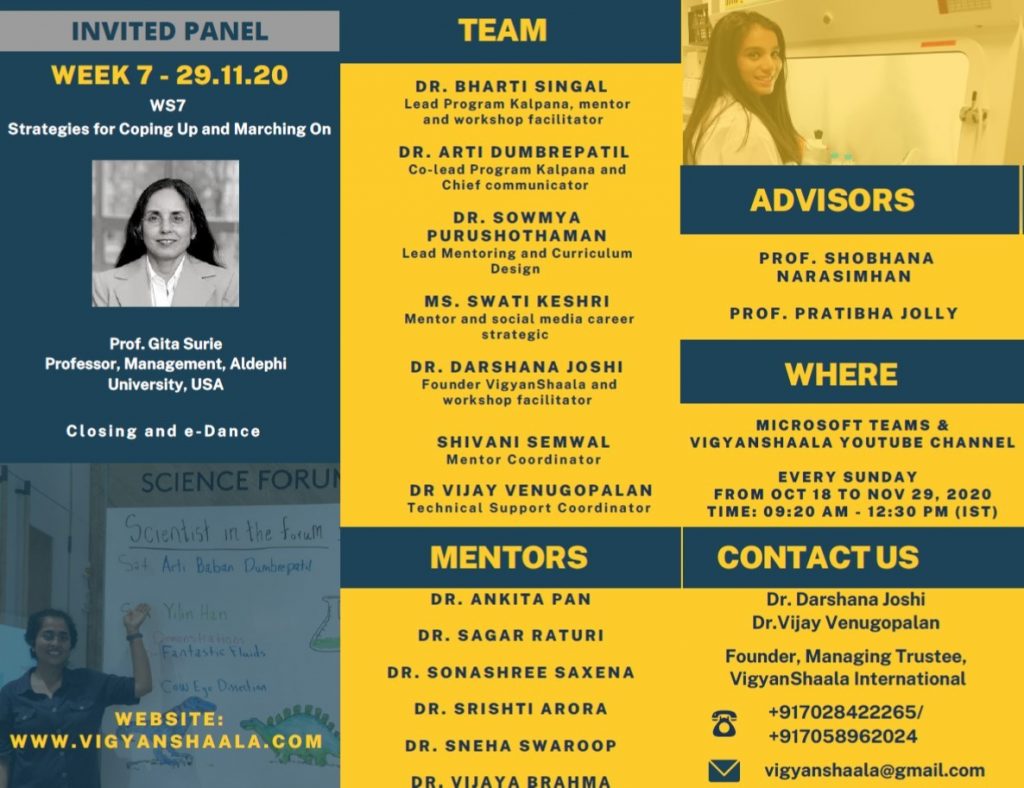
     Meet the amazing team of Kalpana…. 

    Program Kalpana- The core Team 

    Dr. Bharti Singal – Lead, mentor, and workshop facilitator of Program Kalpana 

    Bharti Singal is a PhD from Nanyang Technological University, Singapore with a B.Sc. (HansRaj College), B.Ed. from Delhi University, and M.Sc. from Jamia Millia Islamia University. She is passionate about identifying underlying causes of diseases and contribute substantially to health care and education sector. She is extremely grateful to Udayan Shalini Fellowship Program for providing her the mentoring and financial support during her senior secondary school to undergraduate studies. With the sense of gratitude, she, along with the highly ambitious Kalpana team, has designed and developed program KALPANA with the determination to provide sources of inspiration, tinkering and professional guidance/opportunities to under/post- graduates in India, pursuing STEM education.  She believes with the right mentoring and support; it is possible to create an army of zealous women in STEM who can imagine a career in STEM beyond traditional access barriers and become a role model for many more.  

    Dr. Arti Dumbrepatil – Co-lead and chief communicator of Program Kalpana 

    Arti Dumbrepatil is a science writer at American Society for Biochemistry and Molecular Biology. She utilizes effective science communication and science writing for spreading the scientific awareness in society. Her training as a researcher is extremely advantageous for understanding the complex scientific discoveries and writing impactful science communication articles. She is developing different methods of science communication to understand and simplify the complex biological processes. She completed her PhD from South Korea and worked as a postdoctoral researcher at the University of Michigan, USA. During her tenure at the University of Michigan, she has worked as a Science Communication Fellow (at the Natural History Museum, UMICH) and as a Science Communication Writer (LSA, UMICH). Her writings have covered various topics from Nanorobots to Virology. Arti continues to write as a contributing author to Microbiome Digest and Bio Voice News.  

    Dr. Darshana Joshi – Founder and CEO VigyanShaala International and workshop facilitator of Program Kalpana 

    Darshana Joshi is the Founder and CEO of VigyanShaala International, an organization on a Mission to close the access, attainability, and quality gap in STEM education through guided mentoring and prepare youth for the technology-focused workforce of the future. Darshana has a BSc in Physics from Miranda House, a Masters in Materials Science from Jawaharlal Nehru Centre for Advanced Scientific Research, Bangalore and a PhD in Physics from Cavendish Laboratory, University of Cambridge. A first generation learner, Darshana’s education through high school to undergraduate studies was supported through the Udayan Shalini Fellowship of Udayan Care. Through her work at VigyanShaala, Darshana aims to pay it forward and is passionate to provide equal opportunities of learning and growing to the most marginalized.  

    Swati Keshri – Mentor and social media career strategic of Program Kalpana 

    Swati Keshri is currently pursuing her PhD from Cambridge Institute of Medical Research at the University of Cambridge. She has been extremely fortunate in terms of receiving support throughout her career (she credits the Udayan Shalini program) and can attest the importance of adequate mentoring. Although the landscape of women in STEM is changing in India, the disparity between the numbers of women graduating in STEM as opposed to women getting employed in STEM is substantial. Consequently, this represents a vacuum of appropriate guidance for translating available knowledge and skillset into a career in STEM that can be mitigated with tools like professional socialization and identifying resources. To this end, she wants to provide mentorship to the sprouting young generation of women in STEM to facilitate their pathway to a successful career. 

    Shivani Semwal– Mentor Coordinator of Program Kalpana 

    Shivani Semwal is a Ph.D. candidate in the department of physics and physical oceanography at the Memorial University of Newfoundland, Canada. She is a mentor coordinator of program Kalpana and has been a part of VigyanShaala since its inception. She was the first beneficiary of the VigyanShaala mentoring platform. Being under the purview of a mentor has helped in achieving her career goals. She wants to help other girls to break the stereotype and get involved in science. Mentoring young girls is more important in a country like India, where societal structure and norms have created many problems for women to grow a career in science. Connecting girls to accomplished women would help broaden their horizons and uplift their confidence. Now, she is mentoring two girls and helping them shape their careers. 

    Dr. Sowmya Purushothaman – Lead Mentoring and Curriculum Design  

    Ph.D. from the Imperial college London, M.Sc. Physics Mysore University. Lead, mentoring and curriculum design at VigyanShaala. Growing up in access deprived central India that is constantly under the civil unrest shaped her views on the power of right mentoring at the right time in education.  

    Dr. Vijay Venugopalan– Founder VigyanShaala International and technical support team of Program Kalpana 

    Program Kalpana- The Mentoring Team  

    Hear from our mentors their motivation to join the Kalpana Program 

    Dr. Ankita Pan- I am Ankita Pan, a PhD in structural biology and biochemistry from Nanyang Technological University (NTU), Singapore. Currently, I am working as a Research Fellow at NTU, where I am investigating the carbon dioxide fixation machinery of marine algae. I was motivated to join Kalpana as a mentor to positively impact the minds of young female graduates and be a part of the legacy of shaping tomorrow’s leading professionals. I have been fortunate enough to be mentored by nurturing teachers who saw potential in me and inspired me to pursue a career in STEM. I wish to do the same for the future generations. I believe this mentorship program will be a learning experience for me as well and help me gain new perspectives and leadership skills. 

    Dr. Sagar Raturi– I am Sagar Raturi, a PhD in Pharmacology from the University of Cambridge. For my PhD, I studied the molecular mechanisms underlying antibiotic resistance. I am a life-science researcher by discipline. For the past year, I have taught a pre-university diploma at an international school and thus have gained insight into the journey of students from diverse academic and social backgrounds at the school-university transition. I am very excited to be a Kalpana mentor and very much looking forward to applying my experience as a teacher to have the mentees get closer to their academic goals. Moreover, I am hoping that as a mentor I will be able to help the mentees realize their potential while harnessing their intrinsic motivation for science. 

    Dr. Sonashree – I am Sonashree, a PhD in polymer chemistry and biomaterials from Indian institute of science education and research, Pune. I am currently in a transit period before joining as post-doctoral fellow at Centre of Genomic Regulation, Barcelona early next year. I am keen to be a part of the Kalpana Program mainly because I feel that there is talent amongst all of us and the correct nudge can make all the difference. The role of a few amazing mentors who helped me through my struggles and helped shape my career in Science, is what has made me chose Kalpana Mentor Program, as I feel I can make a difference too. Using my knowledge and experiences I would channel all my efforts to build confidence in the young and help them in their endeavors. I am excited, and strongly hope I make this little contribution of my own to the sea of Hope. 

    Dr. Sneha Swaroop – I am Dr. Sneha, currently working as a Post-Doctoral Research Assistant (PDRA) at the Institute of Cancer Therapeutics (ICT), University of Bradford, UK. I am a recipient of the Schlumberger Faculty for the future fellowship which aims to generate conditions that result in more women pursuing scientific careers by lowering the barriers women face when entering STEM disciplines, thus reducing the gender gap. My field of expertise is cancer research and I love music and enjoy creating hyper realistic portraits. I strongly believe that female voices in STEM fields would substantially contribute to building a strong economy and a bright future for India. The existing gender inequality, lack of access and inclusion in STEM can only be addressed by inspiring more girls and young women to pursue and thrive in scientific careers. ‘Kalpana’ by VigyanShaala, is an excellent and promising initiative towards recalibrating the representation of women in STEM fields by effective mentoring. I look forward to developing women STEM professionals by fostering their self- esteem, ambitions, and career aspirations.  

    Dr. Srishti Arora- I am currently a Postdoctoral research scholar at Department of Physics and Astronomy, Northwestern University. My work focuses on a century-old problem of drop impact dynamics which is still mysterious in many ways. The interest in this problem developed during my PhD that I completed from University of Montpellier, France. As my current lab is newly established, I had the opportunity to mentor a number of high school and undergraduate students. As a beginner, they tend to have a lot of questions and confusions. I developed an “interactive mentorship philosophy” that helps building the confidence and curiosity in the student to explore the research world. As a mentor in Kalpana workshop I am looking forward to instilling the same inquisitiveness among students. 

    Dr. Vijaya Brahma- I am Vijaya Brahma a PhD from the Institute of Microbial Technology CSIR, Chandigarh, India, and Jawaharlal Nehru University (JNU). I worked as a Postdoctoral Scientist at the School of Computational and Integrative Science, JNU, India and University of Toronto- University Health Network projects in Canada. However, my strong interest and inclination for children education, motivated me to further my education in the area of Psychology and Certifications in Counselling and Guidance from Indira Gandhi 

    National Open University IGNOU, India. Working as a Mentorship Program Manager at the Freedom Employability Academy was a highly rewarding experience for me. This experience has inspired me to work  towards encouraging and empowering students especially in STEM disciplines. I am very excited to join program Kalpana that aims to promote young girls to pursue a career in STEM and related fields. 

     Program Kalpana- Science Communication Team  

    Dr. Arti Dumbrepatil – Arti is a science story-teller. Her aspiration is to develop and create inspiring scientific stories. She is working with three amazing young girls who are the part of Kalpana’s scientific communication team. 

    Sharanya Sreepad – Content writing team intern, VigyanShaala. Sharanya is currently pursuing BDS from Bangalore, she strives to make a difference by volunteering and has volunteered with over 15 Non-Governmental Organizations (NGO) over the past 3 years. 

    Anuradha Singh – Content writing team intern, VigyanShaala. Anuradha is from Delhi, currently enrolled as a second year M.Sc. Biotechnology student at the University of Hyderabad. In future, she aspires to become a scientist by profession. 

    Priya Butola – Content writing team intern, VigyanShaala. Priya holds an M.Sc. in Chemistry from SGRR (PG) College, Dehradun, and B.Sc. Physical Sciences from Shyamlal College, Delhi University. Upon completion of her M.Sc. Priya was selected as a Gandhi fellow, a 2 Year Residential, Professional program in Transformation Leadership (2019-21). Coming from an economically disadvantaged background, she faced several family challenges and struggled to continue her studies further. Undeterred by hardship, she has continued to march on the road to her dreams. In her life, teachers, and mentors, who later laid foundation of VigyanShaala, have supported and mentored her since she was in High school and inspired her to move ahead with determination. Now an active volunteer with VigyanShaala alongside being a Gandhi Fellow, she desires to promote the mentorship programs of VigyanShaala as she considers that as a blessing for shaping up a bright future for tomorrow.  

  • “Re-Imagining STEM”​- A Kalpana

    By: Dr. Arti Dumbrepatil, PhD

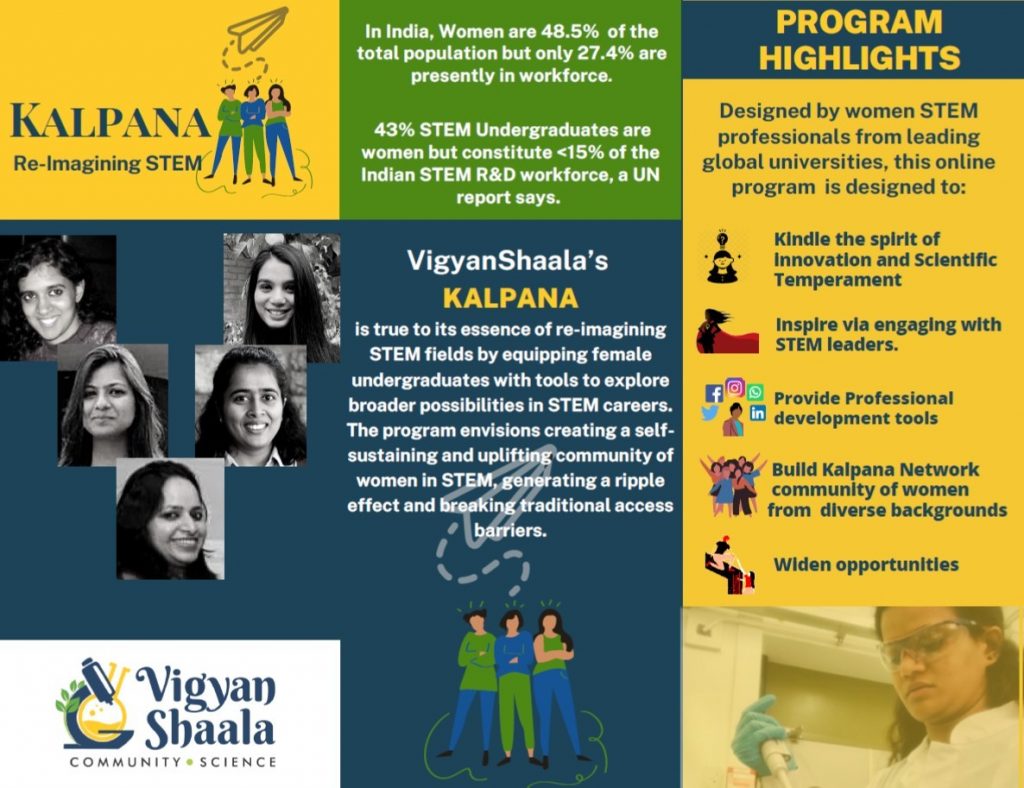
    Kalpana is a Sanskrit word that means “creativity” and “imagination”.
    Project Kalpana is being launched true to its essence of re-imaging Science, Technology, Engineering, and Mathematics (STEM). Kalpana stems from a desire to re-imagine the STEM field with increased participation and promotion of girls and women with creative mentoring. Women in STEM face more barriers including sexism, exclusion, culture (workplace as well as social), a significant lack of career progression. A big fraction of women in STEM has reported that their voices are devalued at work. More important is the fact that the drop-out rate for women in STEM fields is higher. Multiple factors contribute to this huge gender divide such as social-economic parameters, cultural hindrances, financial instability, lack of peer support, work-life balance. Given how the events of 2020 are reshaping the way we live, work, teach and learn it is more than ever important to support and promote women in STEM. We at Kalpana are daring to dream big and imagine a more inclusive STEM field. Learning from and conceding the experiences of women in STEM is necessary to develop and implement meaningful actions for change.
    “We are born makers. We move what we’re learning from our heads to our hearts through our hands.” Brene BrownGirls, women need mentors who can be trusted to talk about work and research, but also about career paths and dreams. Kalpana aims to create a nurturing environment in which naïve dreams will flourish and support will be drawn from different mentors in society. We at Kalpana understand that different stages of careers require different mentorships, and the goal is to offer every participant with a relatable mentor. Everyone has a unique story of our struggles and success molded from our life experiences. Kalpana provides a platform to share these unique stories, to inspire others. We talk a lot about role models—someone to look up to, but not enough about mentors—someone to talk to. Academics of any gender have slowly started to think about mentoring, especially for women, as a crucial part of their jobs. From a school student to a scientist, mentorship is essential to develop oneself in the STEM profession. It is a set of skills that can and should be learned, practiced, and improved upon with self-reflection and feedback. Mentors inspire young minds with their accomplishments and encourage us to dream bigger and bolder. When girls are exposed to relevant, approachable, strong, female STEM role models, a career in the STEM field seems as attractive and attainable as any other. Mentorship helps to build self-confidence, boost communication skills, and enhance leadership qualities that will benefit girls not only throughout their careers but in life as well. Larger systemic changes take time, but this is our effort to re-imagine a new generation of STEM-professionals by increasing access, equity, and inclusion in STEM. Kalpana will bring out inspiring stories of STEM professionals who are involved in the mentoring program. Our mentoring program sets up a precedent for an innovative relationship between the mentors and the mentees.

    #WomenInSTEM #eachforequal #stem4her #sheforstem #STEM

  • Indian Women, Global Journeys In Engineering

    Indian Women, Global Journeys In Engineering

    – By Himanshi Bahl, Communication Intern VigyanShaala

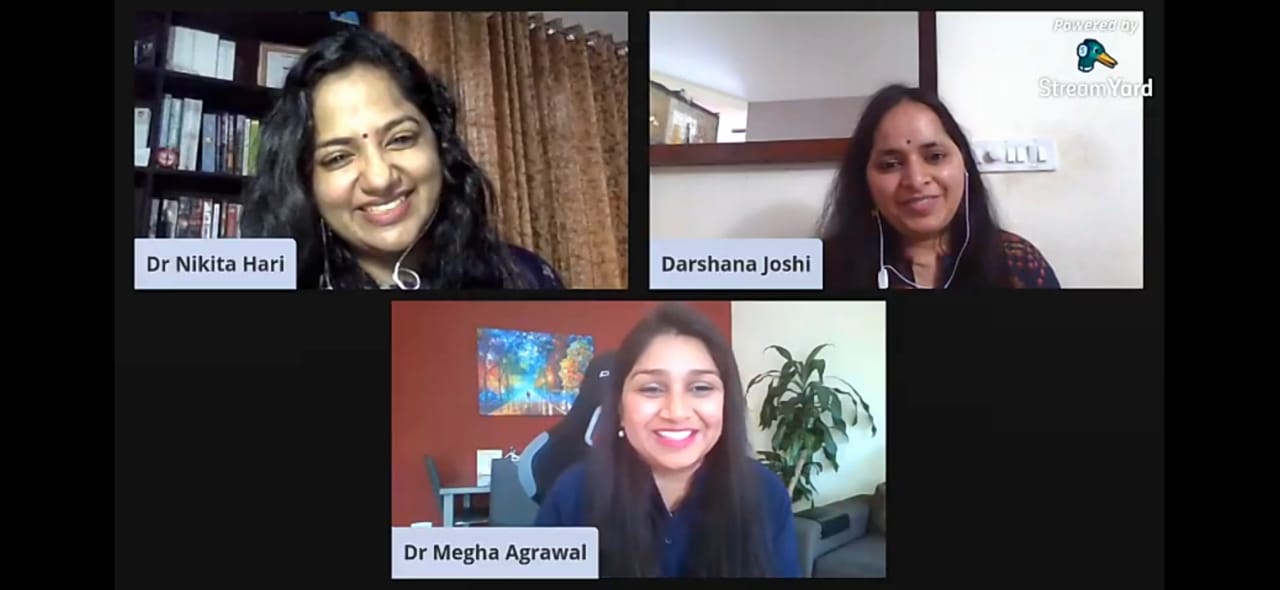
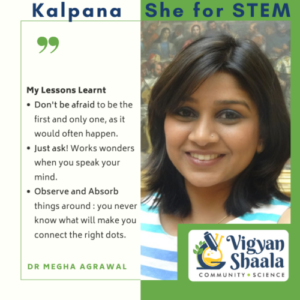
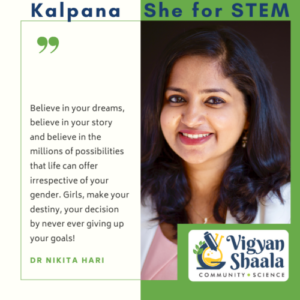
    On the occasion of International Women in Engineering Day (23rd June 2020), VigyanShaala hosted a live session with two talented young engineers who are making their mark on the global technology and engineering platform – Dr. Nikita Hari and Dr. Megha Agrawal.

    The session was conducted with the idea to galvanize the younger generation, under  VigyanShaala International’s flagship Program Kalpana to inspire more girls to pursue STEM (Science, Technology, Engineering, and Mathematics) disciplines. VigyanShaala is bringing stories of inspiring Women in STEM, scientists, researchers and professionals from around the globe to the students in India.


    Indian females make up 48.02 % of the population (as in 2018) but women constitute merely 14% of the total 280,000 scientists, engineers and technologists in research development institutions in India. These numbers clearly display the gender gap in STEM that VigyanShaala seeks to bridge. Increasing visibility of role models is imperative for designing comprehensive solutions for countering this challenge of our times.

    Dr. Megha shared her inspiring journey that spans several continents. She highlighted parts of her journey that inspired the young audience greatly. In her words, “My journey is a drop in the ocean, there are many others” that students can draw encouragement from. She highlighted how her work and research has been interdisciplinary and how disciplines working in tandem should be the norm today.

    She also shared career highlights and life lessons that served as turning points. One should not be afraid to be first and only one, in any place. Women in engineering are rare. Dr Aggarwal aspires that this would not be a norm in future. She beseeched the youth to not be afraid to ask anyone anything but to always speak your mind as others are willing to help. Her family inspired her to observe and absorb things around. This led to making the right connections and joining the dots in her career. Her career choices were driven by her affinity for  Maths, Physics and Biology.

    She feels that Science itself is totally interdisciplinary. Her interest in Engineering ,medicine and Art all converged when she specialised in Biomedical Engineering. Her project on Circadian Ambulatory BP Monitoring at the end of her 4 years undergraduate degree  gave her beneficial insights into how research is conducted. Her going to IIT Bombay was nothing short of a dream to advance her opportunities in Biomedical Engineering. Getting a chance to explore her interests to make healthcare affordable for marginalised communities. She went on to work on Hole in Heart and Blue Baby Syndrome that led her to design a cheap and effective Stent (patent 2013) inspired by badminton shuttle. Her role as a Design Engineer at Stryker Global Tech Center was multifaceted and focussed on implants and bone plates for fracture or trauma.

    Her decisions were based on the answer to How does one define need and which problems need to be solved. She encouraged students not to limit thinking as these are incremental solutions, not out of box. She combined the roles of a mother and a scientist skillfully and asked others out there to not let uncertainty drive their decisions.

    Following Dr Megha Agrawal’s talk, Dr. Nikita Hari who already has two startups to her credit was introduced. Dr Hari started by thanking CoViD-19 warriors and mentioned that women are affected disproportionately and unjustly by Covid, but asserted that CoViD-19 has clearly highlighted that women are the working heros, especially as frontline workers. She was hopeful that now more girls would be attending and completing STEM courses in schools and colleges.

    Dr Hari mentioned that she sees Engineering as a tool that improves the quality of life, contains seeds of future productivity and growth and makes things work better in general. She stressed that it’s time for us to change the the tragic representation of women in STEM disciplines to envision a better future.

    She shared that throughout her career trajectory as an engineer, transitions were not smooth sailing. Looking back and looking forward she sees gender specific growth obstacles that affect a woman’s journey in Engineering.

    Early on in school, her mother served as encouragement to march on and later she broke away from the stereotypical idea of education as a hindrance to marital aspects. She then decided not to allow her future to be dictated by anyone. Thus started her inspiring journey to become the pioneer she is today. A topper of the class throughout her school and gold medalist for both her undergraduate and postgraduate degrees in Engineering, she advised the youth to be disciplined and dedicated to their goal.s Dr. Hari also emphasised that students should not hesitate in reaching out for help. As she realised her aptitude for research and teaching, her dreams got bigger. A decision to study abroad broadened her view of the world. Her only mantra was to never give up as she had come this far, after rebelling, tearing social set up, and stereotypes that tried to contain her dreams. With a belief to bridge the digital divide and help youth come out of poverty, she co-founded two social tech startups – Favalley and Wudi. She was later placed in the Top 50 women in Engineering.

    She stressed that its important to not give up in the face of adversity. Citing personal example, she used challenges in her life as an opportunity to help others. Her personal experiences as a graduate student at the University of Cambridge persuaded her to get involved with student leadership and policy at the University, bringing many long term changes. Her personal journey inspired her to mentor and pay forward to help girls while contributing to policy and diplomacy. Her moto, Engage, Educate and Inspire youngsters to engineer society for good!!

    The session was a grand success with a very enthusiastic audiences. The speakers inspired many to break out of their shells via their arduous journeys and motivated others. The feedback received was extremely positive as the audience not only gained insights but also knowledge.

    Some Feedback from the audience: